
Holistic approach wins for agrivoltaics
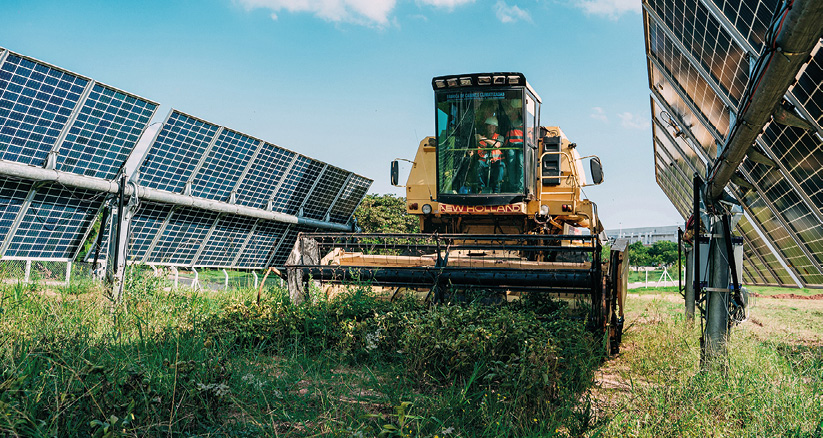
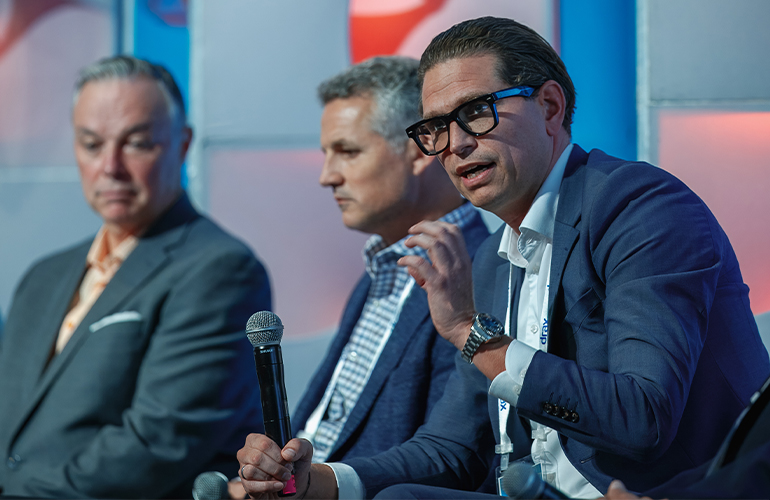
There is growing interest across many regions in integrating solar installations into land already being used for agriculture. Lessons learned from early projects in both livestock and crop farming are stacking up. While best practices are emerging, it’s clear that each project requires an individual approach. pv magazine spoke with Jake Morin, chief product officer at Nextpower, about the state of the art in agrivoltaics.
How do you view the market for agrivoltaics this year, and in which regions are you seeing interest or demand?
Agrivoltaics is moving from early experimentation into a more serious phase of project design. Increased competition for land, community concerns around utility-scale solar, and tighter land-use regulations are all creating more incentive to consider dual-use solutions. At the same time, the finance community is still looking for more large-scale examples that prove the model can work reliably and economically.
The regional drivers vary. In North America, the first wave was largely grazing-based, especially sheep grazing for vegetation management, and we are now seeing more interest in cattle grazing and arable farming between rows. In Europe, the market is more regulation driven. Italy is a clear example, where agrivoltaics has become central to many new solar projects. France is also important, but with stricter requirements that the industry is still working through, particularly around agricultural yield. Germany is another market to watch, especially as larger projects are announced.
It seems different crops and climates have quite different needs in terms of system height, tracker behavior, etc. – can you model and adapt the hardware and software to these?
Agrivoltaics is inherently site-specific. That is why it requires a full system approach. Foundation design affects soil disturbance, grading, tracker height, and long-term farmability. Tracker architecture affects row spacing, machinery access, shading, and site density. Cabling and electrical layout affect how safely and efficiently agricultural activity can continue. Control strategies determine how the system responds to crop needs, livestock movement, equipment access, weather, and energy production objectives.
We’ve focused on developing our NX Navigator software in close cooperation with our customers to make sure we give them the tools to be successful when farming between the rows. We recently introduced agrivoltaics-specific controls that allow for extra light on the ground for specific crop needs or to support managed livestock grazing.
Our performance engineers are very good at simulating the sun’s impact. As a result, we have a very good understanding of the light patterns and intensity on the ground between the tracker rows. Soil and moisture conditions can be measured and the micro-climate between solar trackers is well understood.
And are there ‘easy wins’ emerging in terms of crops that can more readily be integrated with solar?
From our perspective, the easiest win right now is cattle. It can be accommodated in solar power plants with relatively small hardware adjustment. On top of that, the benefits for animal health that the shade provides are well established.
Beyond that, research at our R&D center in Brazil as well as other literature shows good results for soy, peanuts and wheat, for example. Another interesting aspect our research has shown is that the water savings in agrivoltaics can be significant, to the order of 20% to 30%. Basically, the partial shade helps the plants to stay cooler and reduces the evaporation.
What are the biggest concerns when it comes to designing these PV installations for farmed land?
You need to keep the topsoil intact, otherwise it can take three to four years to reestablish, and you are also creating erosion issues. That’s why it is so important to use terrain-following trackers. Pre-seeding before construction makes a big difference, you want to adjust cable management, find the right corrosion rating, adapt the electrical layout, consider module soiling issues and so on.
Agricultural equipment needs safe, predictable movement through the site. Livestock operations require clear zones and durable infrastructure. Cabling and electrical systems need to be protected while avoiding unnecessary conflicts with farm activity. The broader point is that agrivoltaics is not simply solar on farmland. It is a coordinated design challenge. It’s really a holistic approach with experts from all sides working hand in hand.
These projects must require a different approach to cabling, if you can’t bury them in the ground – what is optimal here?
In some projects, the priority may be minimizing soil disturbance. In others, it may be protecting cables from farm machinery, accommodating livestock movement, or creating clear operational corridors.
In many applications, buried cabling can be the preferred approach because it reduces above-ground conflicts and allows machinery or livestock to move more freely through the site. The important point is that cabling cannot be treated as a separate design decision. It has to be integrated early with tracker configuration, foundation layout, equipment access routes, and the lifetime operating model for both the solar project and the agricultural activity.
What about hail? Presumably there’s some conflict between horizontal stow protecting the plants and vertical protecting the modules – how do you work that out?
In most cases, the economics will favor protecting the solar asset during a severe hail event, just as they would in a conventional solar plant. But agrivoltaics adds more variables, including crops, livestock, equipment, and field conditions.
This is where intelligent controls become critical. The value of an advanced control system is not that it eliminates every tradeoff, but that it gives operators more flexibility and more precise control. If an owner or operator wants to apply a different strategy based on the site’s specific conditions, the control system needs to support that flexibility.
Nextpower’s hail-response controls are field-proven and supported by data from operating projects. In 2025, our Remote Monitoring Center recorded 4,422 hail stows with more than 99.99% module survival. That kind of performance is why we view agrivoltaics as a platform challenge. Foundations, tracker design, cabling layout, and control strategies all need to work together so the project can respond to real-world conditions over the full operating life of the site.
The post Holistic approach wins for agrivoltaics appeared first on pv magazine Global.
What's Your Reaction?
 Like
0
Like
0
 Dislike
0
Dislike
0
 Love
0
Love
0
 Funny
0
Funny
0
 Wow
0
Wow
0
 Sad
0
Sad
0
 Angry
0
Angry
0






Comments (0)