

Age awareness for BESS
More than 3 TW of solar capacity has been installed worldwide so far, and deployment rates remain high. This brings its own challenges. Market cannibalization already threatens the long-term profitability of PV power plants. Grid integration and supporting grid services are becoming increasingly relevant. As a backbone of tomorrow’s power system, PV power plants of all sizes will soon be required to provide both reliable and grid-supporting operation.
Grid integration is becoming more challenging. As connection queues grow, there is increased need for energy storage to balance out intermittent renewable generation. At the same time, we are seeing growing demand for energy infrastructure capable of providing grid stability services.
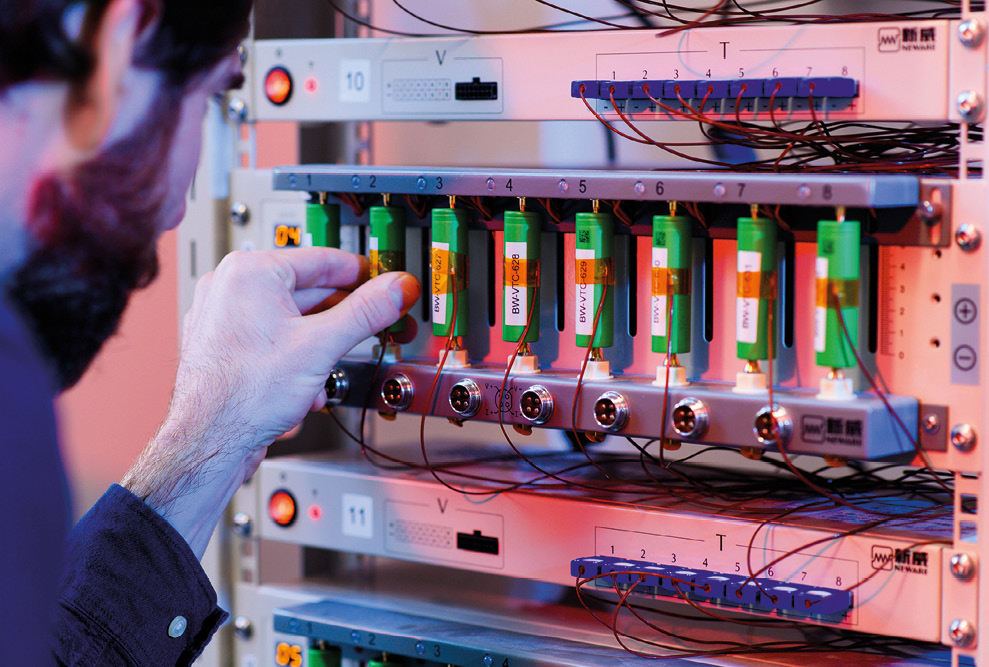
BESS projects of all sizes are increasingly deployed to support the profitable operation and grid integration of PV power plants, and it is crucial that they remain profitable and reliable throughout their entire lifetime. Although BESS are not a new concept, their use in PV power plants subjects them to operating conditions that can be very different from those typically experienced in automotive or electrical appliances, where BESS performance and reliability have been thoroughly studied. To address this important issue, IEA-PVPS Task 13 recently published its “Assessing the Reliability of Battery Systems in Solar Power Plants in Operation” report.
New roles
Battery storage is often used for energy arbitrage, delivering power at times of high value and avoiding export at times of low value. This can raise profitability or reduce energy bills. “If designed and operated correctly, BESS can give substantial contributions to building owners wanting to increase their self-consumption of PV power,” said Patrik Ollas from Swedish research institute RISE, a co-author of the report.
It is also becoming increasingly common to use BESS to enable PV power plants to perform capacity market operations, often regulated through power purchase agreements (PPAs). By employing BESS, an increasing number of PV power plants worldwide are supplying firm power for extended periods, and more PV power plants with BESS in sunny regions are now being designed for 24/7 operation.
Grid integration is also a vital aspect. BESS make it possible for PV power plants to provide grid services such as voltage or frequency support, offer smoothing of rapidly variable production profiles, or avoid transmission bottlenecks. Smoothing operations during partly overcast days typically consist of a very large number of short and shallow charge-discharge cycles, a very different mode of operation than the typical deeper, daily cycles associated with peak shaving. Battery aging is modeled as the sum of two separate mechanisms: calendar aging and cycling, the latter of which is determined by the mode of operation. The exact use of a BESS has a large impact on how it ages.
Another increasingly important use of BESS is to secure access to backup power. In this operational mode, the BESS waits ready and fully loaded until access to the grid is lost.
“We are collecting and analyzing data from PV systems with BESS installed at more than 100 emergency shelters across Florida to understand how such systems should be designed and operated to be as reliable as possible,” said Mengjie Li from the University of Central Florida, a co-author of the report. “In the case of an emergency, these systems will be the only available power source. They’d better work.”
Complex interplay
“The performance of PV systems with BESS in the field is driven by far more than battery chemistry,” said Ulrike Jahn, Task 13 Manager and senior scientist at Fraunhofer Center for Silicon Photovoltaics. “The published report shows that system topology, inverter behavior, control logic, operating profile, temperature and firmware all materially shape efficiency, degradation, end-of-life estimation, and dispatch reliability.”
The operating profiles of the BESS vary substantially depending on their actual use. Determining the associated cyclic aging of PV-specific uses of BESS is a work in progress, and this work becomes more complex if the BESS is set up to perform several tasks simultaneously, often referred to as value stacking. Environmental factors also play a key role in how BESS age, particularly the operating temperature.
The establishment of aging-aware operations in which BESS is controlled to minimize component wear and tear is another intriguing opportunity to increase both long-term performance and lifetime. The monitoring and analysis of data from operational BESS enable the development and validation of precise predictive models of battery degradation. This is a crucial basis for the development of the required control algorithms for aging-aware BESS operations, wherein the degradation cost of each individual battery cycle is taken into account.
Both BESS technologies and the markets they participate in are changing rapidly. Technology developers, vendors, installers, owners and operators of PV systems co-located with BESS, as well as grid companies and regulators, need updated and relevant information to work with. The right selection, installation, and subsequent operation of a BESS can both enable an operator to reduce the risk of safety hazards, and enable the most efficient and reliable operations possible. IEA-PVPS Task 13 published the “Assessing the Reliability of Battery Systems in Solar Power Plants in Operation” report to support the development of reliable and profitable power plants and new technologies.
The report is the result of several years of collaboration between the Institute for Energy Technology (IFE) from Norway, RISE and Checkwatt from Sweden, the Austrian Institute of Technology (AIT), and Case Western Reserve University and the University of Central Florida from the United States.
Room for improvement
The report focuses on operational phases and reviews methods that enable real-time analysis of BESS operational data. This data can help determine key performance indicators and develop better products and services, such as aging-aware BESS operations and more reliable power systems.
Assessments of operating systems clearly show that while most perform as expected, they exhibit a large variation in important parameters, such as the battery round-trip efficiency. This highlights the need for continuous monitoring.
Indeed, the case studies presented show that there is substantial room for improvement across the board. In addition to the performance indicators mentioned above, the report also shares broader experience from the operation of solar power plants with BESS. One example is the need for cell balancing in lithium iron phosphate (LFP) batteries, the most widespread technology in this market segment today. The relationship between the battery state-of-charge and voltage in LFP batteries exhibits a plateau across which exact determination of the state-of-charge is a real challenge. This can lead to wrong estimates of remaining capacity, impacting dispatch. This issue can be overcome by performing cell balancing procedures when the battery is fully charged.
“Unless properly handled, cell imbalance issues can lead to reduced capacity both in terms of power and energy, and it can cause unexpected unavailability on traded positions, severely hitting profits,” said Dan-Eric Archer, CEO of Checkwatt and co-author of the report. “Also, since our systems are actively performing grid support, availability is a critical factor. This can be severely affected by trivial things such as firmware updates. If an update starts while the need and value of grid services is high, this will also affect the bottom line.”
More to come
“This report is an important first step and Task 13 will continue to focus on this area in the coming years. Task 13 experts will dig deeper into available data, information and experience from operational PV systems with BESS, using the methods outlined in the recently published report,” said Task 13 manager Jahn.
The world has rapidly become quite solar powered. In the next phase, PV power plants of all sizes will lean heavily on BESS to provide the required energy services to make solar generated electricity available day and night. The need for open and shared data, knowledge and experience in this field is larger than ever.
About the author

Erik Stensrud Marstein is chief scientist for solar energy at the Institute for Energy Technology (IFE) in Norway, director of the Norwegian PV Research Center (FME SOLAR), and an adjunct professor at the University of Oslo. He has worked at IFE on PV-related research and development since 2003. He has authored or co-authored more than 160 research papers in the field, as well as several patents.
The post Age awareness for BESS appeared first on pv magazine Global.
What's Your Reaction?
 Like
0
Like
0
 Dislike
0
Dislike
0
 Love
0
Love
0
 Funny
0
Funny
0
 Wow
0
Wow
0
 Sad
0
Sad
0
 Angry
0
Angry
0









Comments (0)