
Brazil’s plan for a battery supply chain
Brazil is turning to battery storage in a big way to meet challenges faced by its electricity sector. The immediate goals are increased flexibility and reduced renewable energy curtailment, but batteries also present an opportunity for manufacturing and green industrialization for the country.
Brazil has about 1 GWh of grid-connected battery storage, but a significant expansion is expected to begin in 2027, following the two capacity reserve auctions scheduled by the federal government for December 2026. Although demand is not disclosed in advance, the Brazilian Association of Energy Storage Solutions (ABSAE) estimates that demand for battery energy storage systems in Brazil could reach between 4 GW and 5 GW/16 GWh to 20 GWh resulting from these two auctions alone.
The first auction, scheduled for Dec. 2, will be open exclusively to projects with equipment that meets the minimum local content requirements, calculated in accordance with the methodology of the National Bank for Economic and Social Development (BNDES).
Four different localization routes are already in place. In three of these, the assembly of battery packs within the country is mandatory, while an alternative route requires that power conversion and energy management systems also be developed in Brazil. Beginning in 2028, all projects wanting to benefit from local content incentives will also be required to assemble battery modules in Brazil. Starting in 2031, the domestic requirement will be extended to battery cell manufacturing, and suppliers will need to demonstrate that at least one chemical component in the active material is sourced domestically.
Those who opt for domestically manufactured equipment will have access to BNDES incentive-based financing, with terms of up to 10 years and lower interest rates. According to the bank, it has the financial capacity to support energy storage projects with an estimated budget of BRL 27 billion ($5.3 billion), which could increase to BRL 34 billion subject to future authorizations.
Brazil’s Climate Fund, a government initiative supporting the financing of projects in the low carbon economy, is expected to be the main financing instrument for the projects at an interest rate of 6.5% per year. The fund is raised by Brazil’s National Treasury through sovereign bonds and managed by BNDES.
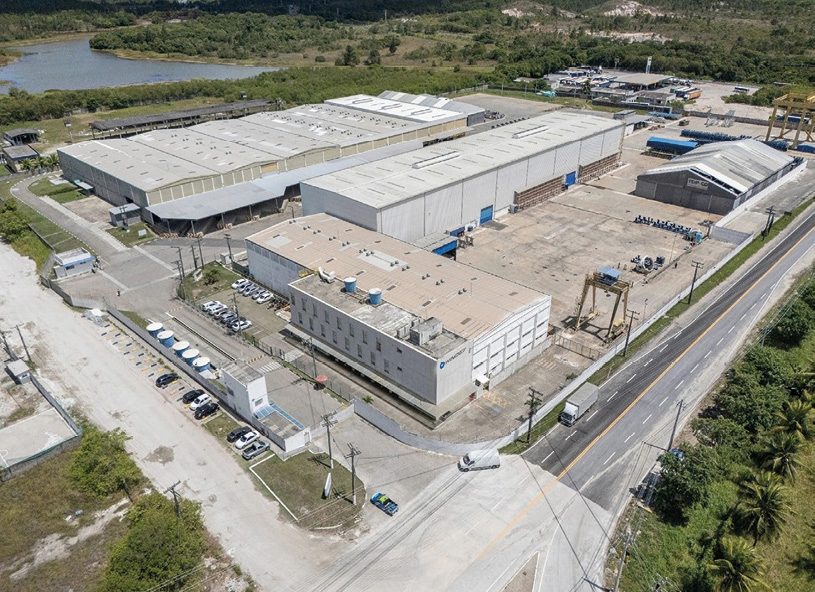
Domestic companies have already taken a stance. WEG, for example, announced a new battery energy storage system (BESS) factory in Itajaí, Santa Catarina, with a supply capacity of approximately 2 GWh per year. To make the project feasible, WEG received BRL 280 million in financing from the BNDES Mais Inovação (More innovation) program through a public call for proposals focused on the processing of strategic minerals for the energy transition and decarbonization. The company, like its fellow Brazilian firm Moura, already has equipment certified in accordance with the nationalization criteria.
A strategic partnership between Moura and Chinese technology giants Huawei and CATL has also been announced to supply domestically manufactured battery systems for the auction. This equipment is expected to be available for projects that must be operational by August 2028. More recently, Chinese state-owned company Windey indicated the potential to supply approximately 1.5 GWh annually from a recently acquired plant in Bahia.
Lithium supply, energy demand
Through a specific call for proposals aimed at promoting the production of critical minerals in Brazil, the BNDES financed WEG’s battery factory with BRL 280 million through its “More innovation” program. The bank’s local content rules include a requirement, effective from 2031, that battery cells be made with domestic inputs, including at least “one chemical component of the active material of domestic origin.” In addition to domestic battery production, the nationalization strategy aims to boost the entire related production chain.
In 2025, Brazil ranked sixth globally in lithium production (4.1%), with 12,000 metric tons, and held the world’s sixth-largest lithium reserves (5%), totaling over 1.8 million metric tons, according to the Ministry of Mines and Energy.
A prime example is Lithium Sigma, which operates in Minas Gerais with an annual production capacity of 240,000 metric tons of lithium concentrate. Currently, most of this is exported to China to be processed into battery-grade lithium carbonate or hydroxide. But bringing this processing to Brazil would add value and help battery cell manufacturers meet the incoming domestic content requirement.
Promoting lithium processing in Brazil and locally producing battery cells – which are already assembled into modules and packs within the country – would be an important step toward strengthening the domestic value chain. In addition to applications in the electricity sector, the manufacture of electric vehicles can also be a source of significant demand for locally made batteries. Electric vehicle production in Brazil is reaching a turning point, with new factories from BYD, GWM, GM, BMW, Toyota, and Brazilian light commercial vehicle manufacturer Hitech all announced or underway. Domestically produced electric vehicles accounted for 39% of the 45,000 EVs sold in Brazil in May 2026, according to the Brazilian Electric Vehicle Association.
The Energy Research Company projects that the electric vehicle fleet (including imported vehicles) will jump from 700,000 to 3.8 million vehicles in the next decade. As a result, demand for batteries could rise from 7.1 GWh to 19.7 GWh by 2035.
Inspired by wind
Brazil’s wind industry has grown with auction support and competitive financing, but BESS may be the main pillar in Windey’s strategy for entering the Brazilian market.
While evaluating the acquisition of the former Siemens Gamesa wind turbine factory in Camaçari, Bahia, Windey initially planned to manufacture wind turbines and battery storage in Brazil. However, given the increasing curtailment of renewable energy generation and the limitations of the power grid, the company decided to prioritize the production of BESS.
“We realized that the grid might not be able to handle so many requests for wind turbines. So we decided to focus, for now, on the solution that will specifically help the Brazilian power system,” Hugo Chang, Windey’s commercial director for Latin America, told pv magazine Brasil.
The acquisition of the 25,000-square-meter industrial plant has enabled the company to accelerate its market entry and reduce capital expenditure. While competitors have announced investments of up to BRL 500 million to build factories from scratch, Windey estimates it will invest up to BRL 100 million over the next three to five years, with more than BRL 30 million in the first year.
In the initial phase, the company will use a 1,500 m² warehouse to assemble the systems locally, importing battery modules from China and integrating them with components produced in Brazil. The first domestically produced BESS is expected to roll off the assembly line in the first quarter of 2027, ahead of schedule to meet the local content requirements of BNDES and its subsidiary, the Special Agency for Industrial Financing (FINAME). These domestically produced BESS should also enable customers to access capital from programs such as the Climate Fund.
To meet and exceed the minimum localization rate of 15%, the strategy calls for the local manufacturing of items such as containers, metal structures, HVAC systems, cables, connectors, energy management system (EMS) panels, and control software.
In a second phase, the company plans to set up a battery module production line in Brazil, carrying out the cell-to-pack process locally. Only the battery cells will be imported in this phase. The expansion will increase the plant’s production capacity from its current 1.5 GWh per year to between 5 GWh and 7 GWh annually.
Windey will operate in three segments. The main one is the utility-scale market, focused on solar and wind projects, transmission companies, and investors, with 5 MWh containerized systems designed to support the power grid, mitigate curtailment, and participate in the capacity reserve auction. The company develops its battery management system (BMS) and energy management (EMS) software in-house, incorporating artificial intelligence capabilities for monitoring and predicting failures.
Windey is part of Zhejiang Machinery Group, a Chinese state-owned conglomerate that also controls DeepSeek, a company focused on AI, and Gauss Energy, a provider of data center infrastructure. Together they form a technology ecosystem that supports the development of Windey’s solutions.
In the commercial and industrial sector, the company has already completed its first sale of a 2 MWh system to shopping centers, in partnership with system integrator 499 Solar, using 261 kWh units for applications such as peak shaving. The business strategy calls for a network of partners to offer energy storage and management services throughout the country.
The company is also targeting the agribusiness sector, conducting studies to integrate BESS into small wind turbines used for irrigation and developing the BESS Truck, a mobile storage system with capacities ranging from 313 kWh to 1.8 MWh, designed to meet temporary demand and recharge electric agricultural machinery.
The post Brazil’s plan for a battery supply chain appeared first on pv magazine Global.
What's Your Reaction?
 Like
0
Like
0
 Dislike
0
Dislike
0
 Love
0
Love
0
 Funny
0
Funny
0
 Wow
0
Wow
0
 Sad
0
Sad
0
 Angry
0
Angry
0






Comments (0)