


Polysilicon playbook
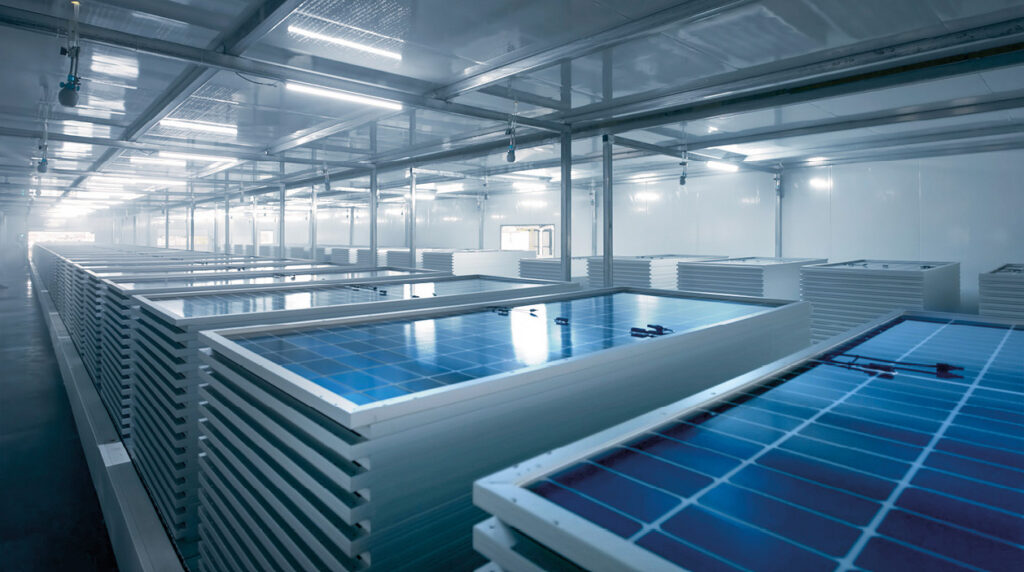
On Aug. 6, 2026, the White House announced the long-awaited outcome of a Section 232 investigation into polysilicon imports to the United States. As of Dec. 4, a 15% ad valorem tariff will apply to all imports of silicon ingots, wafers, cells and modules. Minimum import prices will also apply to these components as well as to polysilicon imports from all regions, and the new tariffs stack on top of existing antidumping/countervailing duties (AD/CVD). “It’s the most aggressive trade action we’ve seen on the solar supply chain,” said Elissa Pierce, research analyst for solar module technology and markets at Wood Mackenzie.
Pierce said most earlier tariffs affecting PV imports began with restrictions on cells. She sees the move back to the polysilicon level, and rules applying to all imports, as a signal that the United States is trying to close loopholes that have allowed firms to move manufacturing to countries not yet subject to restrictions, rather than onshoring to the United States.
Manufacturers in the United States have celebrated the move. “This decision helps support the billions of dollars invested and the thousands of jobs created at factories around the country. It also helps lay the groundwork for more investments, more jobs, and more innovation to come,” read an Aug. 6 statement from Andy Park, global CEO of Hanwha Qcells, which has made among the largest recent investments in US solar manufacturing.
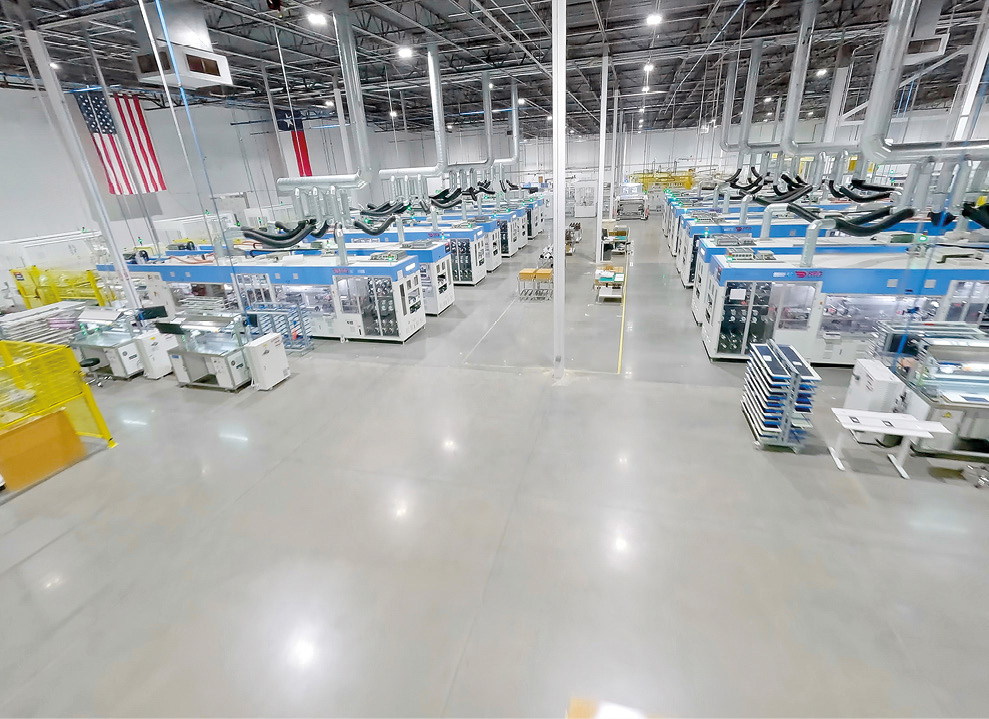
Other manufacturers made similar statements in the following days. SEG Solar inaugurated a new 4 GW module production line in Texas and confirmed plans for a third, as well as a move into cell manufacturing. The following week, Tesla filed tax applications that outline plans for a $10 billion investment to build a vertically integrated wafer to module facility in Texas. Further investments in US solar manufacturing are expected, driven by this supportive policy. “This is intended to really drive manufacturing to the US, but I expect integrated manufacturers to benefit the most,” said Pierce.
Wafer and poly
Upstream components are where the next challenges lie for US solar. Wood Mackenzie expects the United States to round out 2026 with around 70 GW of annual silicon PV module assembly capacity up and running, alongside 12 GW of cell capacity. Domestic polysilicon capacity is estimated at around 29 GW, and the United States currently has only one ingot and wafer factory, Corning’s Michigan facility. The policy aims to create demand for domestically made products and encourage investment in these sectors.
“Ultimately, Section 232 is less a policy to expand module assembly than an industrial strategy aimed at accelerating domestic cell and wafer production. The clearest competitive advantage in the post-232 market will belong to manufacturers that control more of the supply chain,” said Paola Perez Pena, principal research analyst at S&P Global.
While facilities already announced should bring a significant increase in cell manufacturing before 2030, going further upstream is more difficult. Polysilicon, ingot, and wafer manufacturing comes with a higher investment cost than the cell or module segments, and equipment and expertise that is centered in China, possibly raising issues of technology transfer or foreign entity of concern rules. Market observers say it is still unclear whether US wafer manufacturing will reach levels similar to those being built out for cell and module. Pierce calculates that the minimum price and 15% tariff could push imported wafers to around $0.15/W, a level domestic suppliers should be able to compete with. “I’m not sure it’ll ever meet the investment going into cells and modules. But we will likely see some more interest in wafer,” she said.
S&P Global’s analysis also points to wafer manufacturing as the “choke point” in the US supply chain, forecasting that by 2029 the United States will host 106 GW of module assembly – enough to cover more than double expected domestic demand – alongside 36 GW of cell capacity and just 12 GW of wafer.
The United States does have domestic polysilicon manufacturing, but its high energy requirements make establishing more a tough prospect – likely reflected in its different treatment to polysilicon derivatives. Perez Pena said applying a minimum price but no tariff to polysilicon imports demonstrates “the limited number of non-Chinese suppliers and the strategic importance of maintaining feedstock availability.”
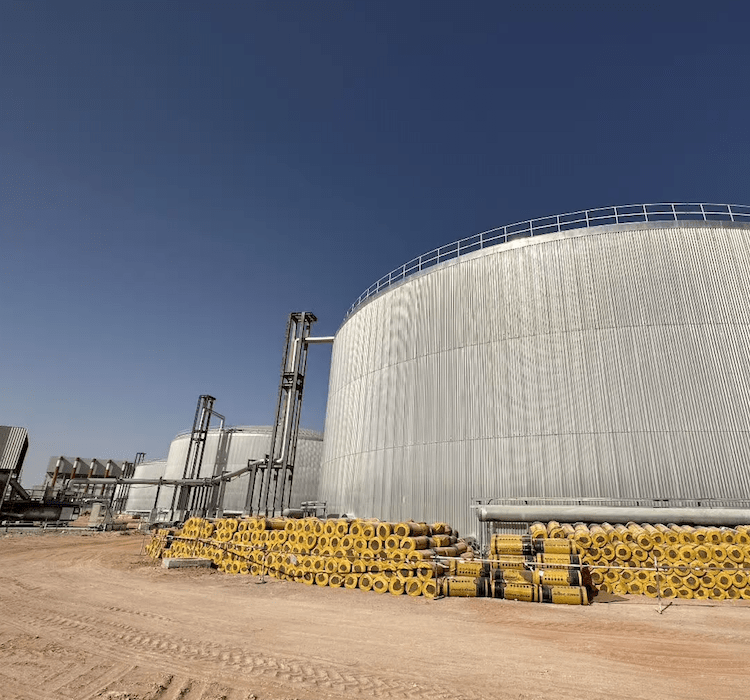
United Solar, which is currently ramping up a 100,000 metric ton polysilicon factory in Oman, also views the tariffs and minimum import price (MIP) as positive for its access to the US market. Binyam Giorgis, United Solar’s chief financial officer, explained his view that minimum price would reduce competition and buyer incentives to go with the cheapest suppliers, instead pushing scale, reliability and traceability to the front of buyer’s minds.
Price increases
Pierce estimated that currently, a module made in Southeast Asia can be imported to the United States for around $0.25/W. Pushing the MIP up to $0.38/W should inevitably lead to an increase in prices on the US module market. The timeline for these elevated prices is not clear.
Pierce said that some project developers already have module inventory for current projects, and that despite anti-stockpiling provisions in the new rules, there may still be some cell and module imports to the United States between now and December.
On the cell side, S&P Global estimated that imports cost $0.14/W to $0.17/W, and calculated that this could double once the $0.22/W minimum price, 30% AD/CVD tariffs and 15% Section 232 tariffs are added up. This should incentivize more manufacturers to keep investing in cell capacity, but short-term price increases could hit some, too.
The rules also allow the US trade secretary to enter into company-specific deals with those who invest in US manufacturing. This would allow those companies to import without tariffs or MIP while their US facilities are under construction, provided they begin construction by Jan. 20, 2029.
It’s not yet clear how this will be applied or how big the uptake will be, but if several manufacturers receive such tariff offsets, it could push price increases further down the line.
Giorgis agreed that energy requirements, environmental permitting and other factors make new US polysilicon capacity difficult to plan, particularly in a timeframe that would have a new facility under construction by 2029. He sees investment in ingot, wafer and cell manufacturing as more realistic, and confirmed that United Solar is evaluating plans to add ingot and wafer manufacturing at its site in Oman’s Sohar Free Zone, and also to expand into the United States.
“Our core business is polysilicon. In the wafer segment though, we see that there is just no capacity that is compliant with US law and we’re trying to help our customers,” he explained. “But if more are willing to build wafer capacity, we’re happy to provide the polysilicon to support them.”
Buyers will likely have to absorb the largest part of any price increase. Some expect that an eventual price increase could lead to project delays and cancellations, and reduced demand overall, but S&P Global’s Perez Pena noted US electricity consumption is trending upward, as data centers drive a need for new generation capacity to be built out rapidly.
“In that environment, a module cost increase is more likely to be absorbed than to cancel projects. The same AI build-out that underpins the semiconductor case for Section 232 may help the solar market absorb the cost of it,” she explained.
Compounding complexity
The Section 232 decision adds to the mass of recent announcements concerning US trade and energy policy. By themselves, these new rules will create demand for cells made in the US, but investment decisions for manufacturing still depend heavily on the Section 45X tax credits for manufacturers, and other tax incentives for domestic content, outlined in the 2022 Inflation Reduction Act. Foreign entity of concern rules also apply to these incentives, and the phase-out of those incentives could weaken the case for new manufacturing capacity. For now, those companies already controlling, or able to rapidly invest in, upstream manufacturing capacity in the United States, look like the winners from this policy update.
The post Polysilicon playbook appeared first on pv magazine Global.
What's Your Reaction?
 Like
0
Like
0
 Dislike
0
Dislike
0
 Love
0
Love
0
 Funny
0
Funny
0
 Wow
0
Wow
0
 Sad
0
Sad
0
 Angry
0
Angry
0







Comments (0)