

Tata Motors Acquires 89.42% Stake in Iveco Group, a Global Commercial Vehicle and Bus Manufacturer
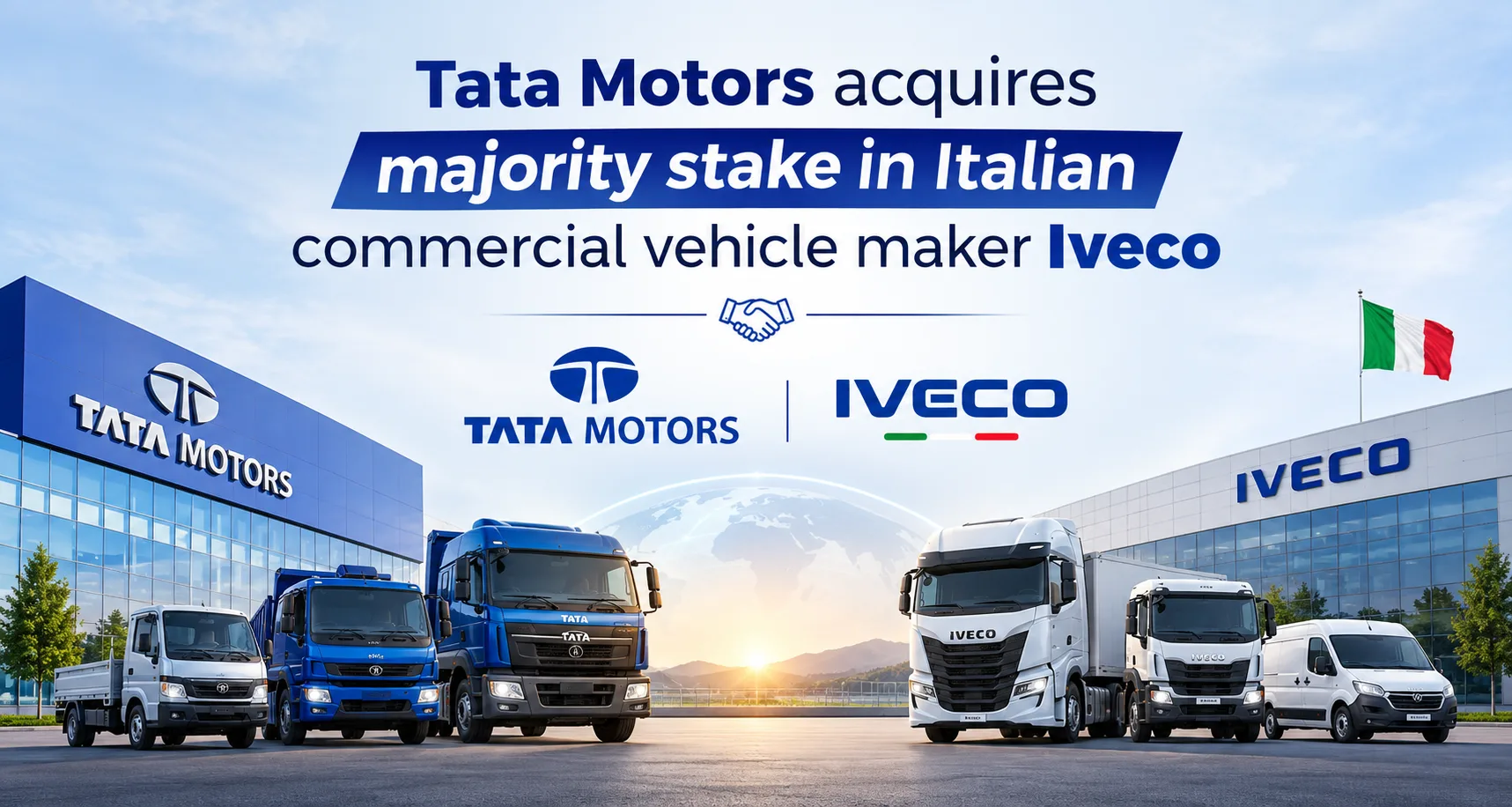
Tata Motors has acquired an 89.42% stake in Iveco Group, expanding its global commercial vehicle business. Beyond trucks, Iveco’s electric buses, hydrogen technology and charging infrastructure solutions could create significant opportunities for Tata Motors.
Tata Motors has taken control of Iveco Group, marking a major step in its global commercial vehicle expansion. The acquisition gives the Indian manufacturer access to an established European business spanning trucks, buses, powertrain technologies and financial services.
However, one part of the acquisition deserves particular attention: IVECO BUS.
Through IVECO BUS and HEULIEZ, Tata Motors gains access to battery-electric city buses, electric intercity buses, hydrogen fuel-cell technology and electric minibuses. It also acquires capabilities in charging infrastructure and fleet-energy management.
This makes the deal more than a geographical expansion. It potentially gives Tata Motors access to a broader commercial electric mobility ecosystem.
Tata Motors Completes Initial Iveco Acquisition Settlement
Tata Motors and Iveco Group announced the completion of the initial settlement of the recommended tender offer.
Tata’s acquisition vehicle now holds 238,157,212 Iveco common shares, representing approximately 89.42% of its common share capital, excluding treasury shares. The offer price was €14.40 per share, including the dividend.
The offer will reopen from November 2 to November 6, 2026, with settlement for shares tendered during this period scheduled for November 13.
Iveco’s former defence business is excluded from the transaction.
The new board includes N. Chandrasekaran as Chairperson and Senior Non-Executive Director, Olof Persson as CEO, and Tata executives P.B. Balaji and Girish Wagh.
Iveco Group operates across four major businesses: IVECO commercial vehicles, FPT Industrial powertrains, IVECO BUS and HEULIEZ buses, and IVECO CAPITAL financial services. The wider group has approximately 33,000 employees, 16 industrial sites and 22 R&D centres.
IVECO BUS: Four Electric Mobility Opportunities
IVECO BUS has developed products for different passenger transport requirements, extending beyond conventional city buses.
1. E-WAY: Electric City Buses
The E-WAY range covers vehicle lengths from 9.5 metres to 18 metres. It offers battery-electric configurations for urban transport, with overnight depot charging and pantograph-based opportunity charging options.
The portfolio also includes 12-metre and 18-metre LINIUM Bus Rapid Transit variants.
2. E-WAY H2: Hydrogen Fuel-Cell Bus
The 12-metre E-WAY H2 combines a 100 kW hydrogen fuel-cell system with a 69 kWh battery pack.
Hydrogen technology could suit certain transport operations where long operating hours or limited charging windows make conventional battery-electric buses difficult to deploy. However, its commercial viability depends on hydrogen availability, refuelling infrastructure and operating costs.
3. CROSSWAY Low Entry ELEC: Electric Intercity Bus
The CROSSWAY Low Entry ELEC is designed for suburban and intercity transport. Available in 12-metre and 13-metre configurations, it offers battery capacities of 346 kWh, 416 kWh and 485 kWh.
IVECO BUS claims a range of around 400 kilometres, depending on configuration and operating conditions. Charging options include CCS2 and pantograph systems.
4. eDAILY LE: Electric Minibus
The eDAILY LE can accommodate up to 27 passengers. It uses three or four 37 kWh battery packs, with a manufacturer-claimed range of up to 270 kilometres.
Together, these vehicles give Tata Motors access to electric passenger transport technologies across multiple segments.
Charging Infrastructure Could Be the Bigger Opportunity
Perhaps the most interesting part of IVECO BUS is its Energy Mobility Solutions (EMS) business.
Electric bus operators need more than vehicles. They require charging hardware, infrastructure planning, energy management, maintenance and technical support.
IVECO BUS’s EMS division offers fleet dimensioning, charging equipment, smart-charging solutions, site energy management software, engineering design, installation, commissioning and maintenance.
The company says it has delivered more than 1,000 electric buses and positions itself as a system integrator rather than simply a vehicle supplier.
For Tata Motors, this creates an opportunity to participate in the wider electrification value chain. Charging infrastructure and fleet services can also build longer-term customer relationships beyond the initial vehicle sale.
What Could This Mean for India?
Tata Motors already has experience in India’s electric bus market. Iveco adds international experience in electric intercity buses, hydrogen fuel-cell technology and integrated charging solutions.
There could be opportunities to explore technology collaboration, vehicle development and charging infrastructure expertise.
However, there is no confirmed announcement of IVECO BUS technology transfer or specific product integration into India.
Any such move would need to account for local vehicle costs, operating conditions, charging availability, supply chains and public transport procurement requirements. European products cannot automatically be considered commercially suitable for India without adaptation.
The Challenges Ahead
The acquisition also brings integration challenges. Tata Motors must manage different markets, regulatory environments and customer requirements while maintaining Iveco’s existing operational strengths.
The company will also need to allocate capital carefully across conventional commercial vehicles, battery-electric platforms, hydrogen technology and charging infrastructure.
Competition is increasing, and access to technology alone does not guarantee profitability. The combined business must demonstrate that its expanded portfolio can translate into stronger sales, customer value and sustainable returns.
The Real Test Begins Now
Tata Motors’ acquisition of Iveco gives it a stronger international commercial vehicle platform. But IVECO BUS could become an important part of its long-term electric mobility strategy.
Its electric city buses, intercity platforms, hydrogen technology and charging solutions offer capabilities across multiple parts of the transport ecosystem.
The opportunity is not simply to sell more electric buses. It is to combine vehicles, infrastructure, energy management and fleet services into a competitive business.
The global platform is now in Tata Motors’ hands. How effectively it uses Iveco’s technology and expertise will determine the real value of the acquisition.
What's Your Reaction?
 Like
0
 Dislike
0
 Love
0
 Funny
0
 Wow
0
 Sad
0
 Angry
0






Comments (0)