
Transit Agencies Continue to Grow U.S. Fuel Cell Bus Fleets
by Jennifer Gangi
August 10, 2026
Fuel cell buses are not new to the transit scene. Accumulating hundreds of thousands of miles on routes all around the world over several decades of operation, fuel cell systems have provided transit agencies with reduced bus fleet emissions while keeping vehicle range, fueling times, and road performance the same or better than conventional engines in different climates and regions.
In the U.S., transit agencies in multiple states have fuel cell buses and hydrogen fueling stations in planning stages or operating today. FCHEA has covered fuel cell bus development and deployment progress several times in the Catalyst, highlighting the steady growth and expansion across the country.
The Low or No Emission Vehicle Program (Lo-No), run by the Federal Transit Administration (FTA), has been a critical factor in some of the fuel cell bus deployments and hydrogen fueling infrastructure development in the U.S. In 2024, the FTA awarded nearly $300 million to transit agencies in California, Indiana, Michigan, New York, Ohio, Oregon, and Washington for hydrogen fuel cell bus projects. In 2025 and 2026, that number went down to zero.
Over the past year, even despite the constriction and shift of federal funding program focus, more fuel cell buses are hitting the road and many of the agencies with fuel cell buses already in service have announced plans to integrate additional vehicles and build more hydrogen fueling capabilities to support the growing fleets.
West Coast
California boasts more than 65 fuel cell buses in operation throughout the state, with more than 100 additional ones in development. Many of the buses and agencies running them, like Alameda-Contra Costa Transit District (AC Transit) and SunLine Transit, were early adopters, accumulating critical operating and technical data and experience that led to technology and chassis design advancements, and next-generation fuel cell systems, improving overall bus performance and system efficiency.
The California Air Resources Board (CARB), through the Innovative Clean Transit (ICT) regulation, mandated that as of January 1, 2026, large transit agencies (>65 revenue-service buses) must ensure that at least half of new annual bus purchases are zero-emission buses (ZEB) – be it hydrogen fuel cell buses or battery-electric ones. Small transit agencies have a similar twenty-five percent obligation. CARB oversees the state’s Clean Truck and Bus Voucher Incentive Project (HVIP) to assist California bus agencies to meet these ICT requirements.
The South Coast Air Quality Management District (AQMD), which covers Los Angeles, Orange, Riverside and San Bernardino counties, also provides funding assistance for transit agencies in the district to transition to ZEBs. South Coast AQMD’s Mobile Source Air Pollution Reduction Review Committee (MSRC) just closed a $25 million request for proposals for its Zero-Emission Transit Bus Incentive Program to help offset the cost of new battery-electric and hydrogen fuel cell buses and charging infrastructure.
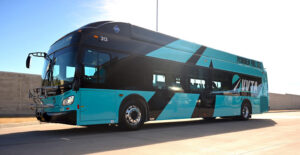
Early this year, the Victor Valley Transit Authority (VVTA), located in San Bernardino County, unveiled 13 hydrogen fuel cell buses, as well as a mobile hydrogen fueling unit to support them. The initiative received funding and support from both federal and state government agencies, including the FTA, CARB, San Bernardino County Transportation Authority, and others. VVTA plans to add another mobile fueler and is working with FCHEA member Air Liquide to construct a permanent hydrogen fueling station at its Hesperia facility.
The California Energy Commission (CEC) also provides funding opportunities to transit operators looking to integrate more ZEBs and hydrogen fueling into their fleets. In June 2026, CEC announced more than $20 million for hydrogen projects via its “Depot Charging and Hydrogen Refueling Infrastructure for Medium- and Heavy-Duty On-Road Zero-Emission Vehicles” funding program, including two totaling $12 million to SunLine Transit Agency and San Mateo County Transit Agency (SamTrans), for hydrogen fueling stations to support the agencies’ fuel cell bus fleets.
SunLine will receive $4 million for a liquid hydrogen station in Indio, California, and San Mateo was awarded $8 million for a permanent hydrogen fueling station project for its SamTrans fuel cell bus fleet.
For that station, SamTrans contracted FCHEA member Bosch Rexroth and partner FASTECH to design, build, and commission the large-scale hydrogen refueling station, that will use Bosch Rexroth’s CryoPump technology to deliver up to 3.5 tons of hydrogen per day through four dispensers. Once constructed, the station will be the largest refueling station in the world dedicated to transit bus operations in the world. SamTrans currently has 10 fuel cell buses in operation, with an approved plan for 108 more.
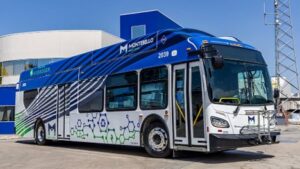
Most recently, Montebello Bus Lines’ (MBL) first three hydrogen fuel cell buses hit the road in August 2026, utilizing funding from the FTA’s Urbanized Area Formula Program. The agency plans to install a permanent hydrogen fueling station to support the buses.
Source: Mass Transit magazine
In Washington state, the Department of Transit was awarded ~$15 million from FTA’s Lo-No Program in 2024 for Island Transit to purchase hydrogen fuel cell buses for Whidbey Island in Puget Sound. To fill the funding gap and keep momentum moving forward, the state and several of the transit agencies involved are stepping up.
Washington has a robust cap-and-invest program, the Climate Commitment Act (CCA) and is investing the revenue generated into programs focused on reducing the state’s carbon footprint and greenhouse gas emissions, including fuel cell buses.
Intercity Transit, covering Thurston County, has five hydrogen fuel cell buses, awarded a $4.6 million contract to construct a hydrogen fueling station in Olympia, and currently has an open solicitation for hydrogen tube trailers to deliver hydrogen.
In late 2025, Lewis County Transit opened a procurement for a hydrogen service bay for its planned fleet of six buses and is constructing a 1-megawatt electrolyzer system to generate up to 2,000 kilograms of hydrogen per day at the Port of Chehalis. The agency currently has three and has received more than $7 million from the Washington State Department of Commerce, through legislative appropriations and its Carbon Decarbonization Program.
East Coast
On the East Coast, New York is growing its collective fuel cell bus fleet at several transit agencies – both upstate and in the heart of New York City.
New York City’s Metropolitan Transportation Authority (MTA) received two hydrogen fuel cell buses in June 2026 and completed its initial infrastructure validation. $8 million in funding was awarded to MTA back in November 2022 through the New York State Energy Research and Development Authority (NYSERDA) Electric Truck & Bus Challenge grants. MTA is planning on installing a hydrogen fueling station capable of fueling up to 40 buses at its Gun Hill depot in the Bronx.
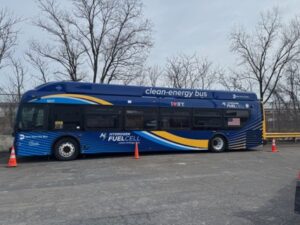
In October 2025, three New York transit agencies were awarded a total of $52.5 million ($17.5 million each), from the state’s Zero-Emission Transit Transition Program (ZETT). The agencies will use portions of the funding to acquire fuel cell buses with Capital District Transportation Authority (Schenectady and Montgomery Counties, as well as parts of Saratoga County) purchasing two, Rochester-Genesee Regional Transportation Authority (RTS) buying 10 fuel cell buses to add to its fleet of two, and Central New York Regional Transportation Authority (Oneida County) to include fuel cell buses in its plans.
In Maryland, the Montgomery County Department of Transportation (MCDOT) won an FTA Lo-No grant in 2022 to purchase 13 hydrogen fuel cell buses. Progress has steadily continued to construct the hydrogen infrastructure to support that flee and in Gaithersburg, the David F. Bone Equipment Maintenance and Transit Operations Center (EMTOC), held a ribbon cutting in April 2026, houses a microgrid that includes a 1 MW on-site hydrogen electrolyzer, 5.65 MW of solar arrays, and battery energy storage. EMTOC plans to expand its zero-emissions fleet to 200 buses by 2035.
FCHEA Focus
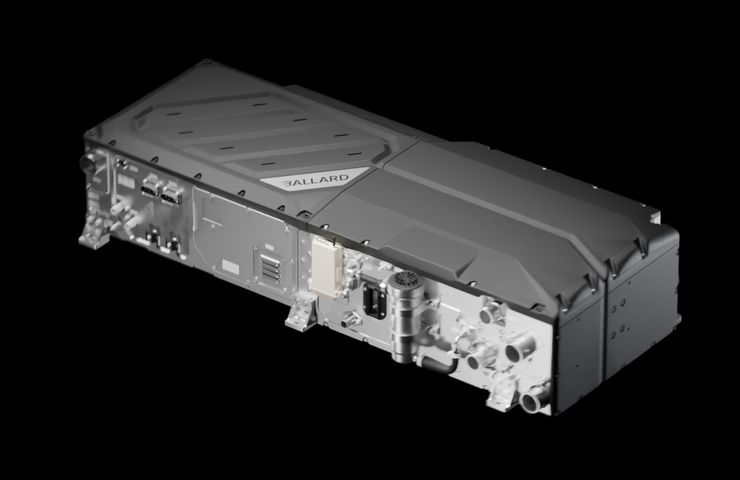
In past Catalyst blogs, we’ve showcased FCHEA members involved in the medium- and heavy-duty bus market. One FCHEA member, Ballard Power Systems, has its fuel cell systems powering more than 1800 buses around the world, more than 220 in North America, including many mentioned above, with its long-standing bus partner, New Flyer (NFI). In March 2026, Ballard announced a large-scale commercial agreement with NFI specifically focused on the North American bus market for 500 of Ballard’s FCmove®-HD+ fuel cell engines, totaling 50 megawatts (MW), to power New Flyer’s Xcelsior CHARGE FC™ hydrogen fuel cell buses.
Also in March, Bosch announced its new C100 fuel cell power module for urban buses. The system provides 100 to 300 kilowatts (kW) and has a flat design and 40-centimeter height so it can be mounted on the vehicle roof.
Fuel cell buses are a key component to helping states and transit agencies reach their goals to reduce harmful emissions while maintaining the rider’s expectations of performance and reliability. While some states are investing in the technologies to fill funding gaps, FCHEA is actively working with our members and allied organizations on federal policies and programs that support the heavy-duty fuel cell vehicle sectors, including infrastructure. This includes advocating for robust funding for the Lo-No Program and assurances it will continue to include hydrogen and fuel cell projects into the future.
Keep following the Catalyst to make sure you don’t miss any updates in the bus/transit sector!
The post Transit Agencies Continue to Grow U.S. Fuel Cell Bus Fleets appeared first on FCHEA.
What's Your Reaction?
 Like
0
Like
0
 Dislike
0
Dislike
0
 Love
0
Love
0
 Funny
0
Funny
0
 Wow
0
Wow
0
 Sad
0
Sad
0
 Angry
0
Angry
0




Comments (0)