

RSPO Impact Report 2026: 40% market potential for Certified Sustainable Palm Oil
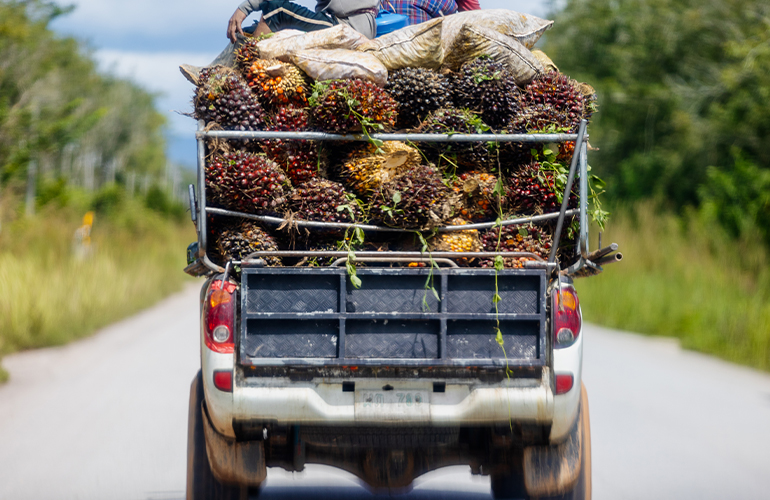
According to the RSPO Impact Report 2026, the pipeline for global market transformation is strong, particularly in Latin America where RSPO Members account for nearly 75 percent of regional output, with 29.3 percent already RSPO Certified in 2024.
Africa has seen a transformative 46.23 percent surge in supply. The growth trajectory indicates that Certified Sustainable Palm Oil (CSPO) supply could reach nearly 40 percent of global palm oil supply as members continue to certify their plantations against the RSPO Standard.
With our grower members holding the capacity to supply nearly 40 percent of global demand, we have long moved past the question of whether sustainable palm oil is possible and are actively scaling across global markets. The report shows that sustainable palm oil has measurable and valuable impacts, said Joseph D’Cruz, CEO, RSPO.
RSPO Membership continues to grow, with 6,280 members globally across 103 countries and territories.
The most significant membership growth is seen in China, Indonesia, and Japan, reflecting expanding market awareness in Asia and large palm oil-consuming countries.
Expanding conservation and climate progress
Beyond market expansion, the report highlights significant progress across environmental protection.
RSPO Members conserve and protect 551,637 ha of critical land. While previous Impact data reported only High Conservation Value (HCV) areas, this total now includes High Carbon Stock (HCS) areas and peatlands.

Stories from the ground bring to life what biodiversity protection looks like in practice, from species encountered on plantation edges to restored waterways and wildlife corridors.
In West Kalimantan, Indonesia, Bumitama Agri Ltd established a Biodiversity and Community Project, which secured a legal decree to protect over 8,300 ha of conservation area.
RSPO Members continue to prove that climate commitments can be quantified, verified, and delivered in multiple ways, including peatland rehabilitation and cutting methane emissions through Palm Oil Mill Effluent (POME) capture.
Cumulatively, since 2015, 2.98 million tonnes of carbon dioxide equivalent (CO2eq) greenhouse gas (GHG) emissions per annum have been avoided.
Empowering workers and smallholders
RSPO Certification continues to strengthen social standards across the supply chain.
A total of 661,219 workers are directly employed within RSPO Certified operations under systems designed to safeguard their rights and freedom.
Independent smallholders generated US$7.9 million through credit sales in 2025. Long-term effectiveness depends on increasing and broadening the global demand for credits to sustain their value and ensure smallholders are meaningfully rewarded for their sustainability efforts.
Smallholders continue to be supported through the Smallholder Training Academy and the RSPO Smallholder Support Fund that has benefited 44,796 smallholders since 2013.
Enhanced reporting
Complementing the new report is an enhanced RSPO Impact webpage.
While the print report provides a concise, high-level overview of RSPO’s yearly progress, the interactive website serves as a comprehensive resource, offering expanded datasets, multi-year trends, additional indicators, and supporting information for stakeholders seeking deeper insights.
What's Your Reaction?
 Like
0
Like
0
 Dislike
0
Dislike
0
 Love
0
Love
0
 Funny
0
Funny
0
 Wow
0
Wow
0
 Sad
0
Sad
0
 Angry
0
Angry
0







Comments (0)