

Argentina’s next era
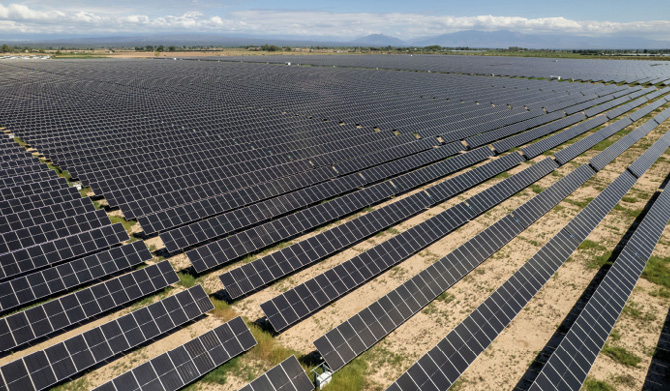
Argentina’s solar industry has had to adapt since the RenovAR renewable energy public procurement program was shuttered in 2025. Reliance on large, centralized tenders has been replaced with private sector contracts.
RenovAR launched in 2016 and ran four successful tenders, adding new clean capacity into Argentina’s wholesale electricity market and renewable energy futures market (known as MATER).
The starting point for development post-RenovAR is an installed base of more than 2 GW solar capacity. Installed solar capacity in Argentina stood at 2.5 GW in February, according to data from the wholesale electricity market administrator (CAMMESA), while total renewable capacity reached 7.9 GW, excluding hydroelectric power stations larger than 50 MW. Since then, more new projects have come online or started feeding electricity into the grid.
Industrial demand
Several projects have underpinned the latest phase of growth, which is being driven by industrial demand.
YPF Luz commissioned the 305 MW El Quemado solar plant in Mendoza this year. Located in the Las Heras department, the facility covers 620 hectares and involved a reported investment of between $211 million and $220 million, making it one of the largest plants in the country. YPF Luz said the project will support the creation of a sustainable energy hub for industrial developments.
The 129 MW San Juan Sur solar plant owned by Genneia reached full commercial operation in June, alongside the company’s 180 MW San Rafael facility. Genneia also operates a broader solar portfolio that has positioned it as one of Argentina’s largest PV power producers.
Both Genneia and YPF Luz have applied to list on the New York Stock Exchange.
On a smaller scale, Argentina’s Energy Secretariat authorized the 12 MW Del Valle solar plant owned by textile company Algodonera del Valle in Catamarca province to join the wholesale electricity market as a generating agent.
The project illustrates another emerging development model. Industrial PV installations are no longer being driven exclusively by the sale of renewable electricity to the grid, but also by companies seeking greater cost predictability and power supplies linked directly to their business activities.
The development pipeline is also continuing to expand. In May, developers submitted transmission access applications for four solar plants totaling 58.9 MW. All four projects plan to connect at 33 kV, reflecting the increasing role of medium-sized plants linked to distribution grids or existing electrical infrastructure and therefore less dependent on major high-voltage transmission lines.
Grid bottleneck
According to Marcelo Álvarez, president of the Argentine Chamber of Renewable Energy (CADER), the country must establish a transition framework while new transmission projects are being developed.
“Distribution networks have a role to play; distribution network operators and GUMA – large users on the wholesale electricity market – with contracts directly with distribution networks are areas that will need to be encouraged so that the market can continue to grow at its current pace; otherwise, there will be a slowdown,” he told pv magazine.
The transmission bottleneck is not new, but it is becoming increasingly significant. Argentina’s best solar regions, particularly the northwest and the west-central Cuyo region, are already competing for available grid connection capacity.
Mining projects may be able to justify dedicated infrastructure, but much of the country’s non-mining solar growth will require interim solutions.
“Until grid infrastructure is physically available, projects will either be linked to mining or connected to distribution networks,” Álvarez said.
Mining and lithium
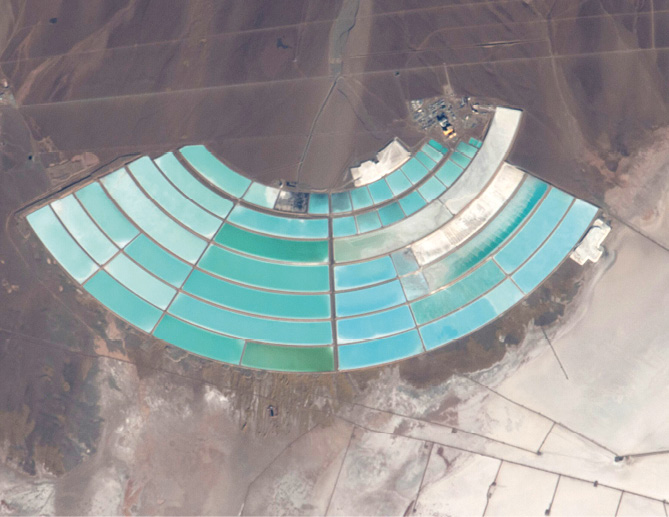
Mining is emerging as one of the clearest drivers of new renewable demand. The incentive scheme for large investments (RIGI) has become a key tool for lithium and copper projects, offering long-term tax, customs, and foreign exchange benefits. The YPF Luz-owned El Quemado solar park is part of the RIGI scheme. A 2025 report by the Mining Secretariat identified six lithium projects in operation, alongside 15 projects at advanced stages of development and more than 40 at earlier stages. The same report projected that annual lithium exports could exceed $11.3 billion by 2032, up from $645 million in 2024.
For the solar sector, the link is direct since mining projects require competitive and traceable energy. Álvarez stated that mining “will be the primary beneficiary” of an energy transition agenda.
“All mining investment in Argentina is planned around renewables – on-grid, off-grid and hybrid systems – but all based on renewables. That is why I am optimistic about the renewable energy activity in Argentina,” he said.
DG growth
Distributed generation capacity is also growing. After years of subsidized tariffs, the removal of widespread subsidies and the rise in electricity costs have changed the economic equation for self-consumption. Martín Ponsá, an electrical engineer specializing in solar for industrial self-consumption, distributed generation and on-site power purchase agreements (PPAs), said there is a tailwind pushing Argentina’s distributed generation market forward. As he explained, tariffs were frozen in 2019 and the subsequent rise altered the profitability of projects.
“Equipment prices, including inverters and solar panels, are at historic lows, and there is considerable competition in installation labor,” Ponsá said. “Previously, a payback calculation would result in seven, eight or 10 years. Today, it is around three to four years.”
According to his data, Argentina had 4,253 user-generators and 143 MW installed in March 2026 under the formal scheme, although the actual figure could be higher due to off-grid installations or systems that have not completed the connection process.
“There may be more than 40% of installations that nobody sees,” according to Ponsá.
The shift can be seen in the industrial sector. Ponsá said initial growth was concentrated among household users with higher purchasing power, particularly in private residential estates – gated residential communities typically located on the outskirts of major cities. As he explained, companies are exploring the possibility of installing solar systems for self-consumption, in a context where photovoltaics is no longer merely an environmental or reputational decision but is becoming a tool for cost reduction, protection against tariff volatility and enhancing production competitiveness.
Energy storage
Energy storage is the third pillar of Argentina’s emerging solar market. The country has not adopted battery storage in the same way as neighboring Chile (see pp. 18-21), where solar curtailment drove the development of systems to shift surplus midday generation to the nighttime. In Argentina, the first BESS tenders were a response to system and demand management needs, plus the need to provide relief at critical nodes on the network.
The AlmaGBA tender was the first step with a call to contract storage with the electricity distributors Edenor and Edesur in the Buenos Aires metropolitan area. According to the government, 713 MW of capacity was awarded, more than 40% higher than the initial target of 500 MW, with an estimated investment of more than $540 million. The projects are currently progressing.
The second step was Alma SADI, named after Argentina’s national interconnected power system. In July, the Energy Secretariat awarded 700 MW across 20 projects in seven regions of the country, representing an estimated investment of $700 million. The process received 235 technical bids totaling 8.3 GW, more than 11 times the tendered target. The successful bidders were Genneia, DQD Energy, 360 Energy Solar, Aluar and Intermepro.
Opportunities and constraints
Argentina has strong solar resources, growing mining demand, electricity prices that make distributed generation attractive, active private-sector developers and a new large-scale energy storage segment. But it also has inadequate grids, expensive financing and a macroeconomic environment that still constrains the inflow of capital.
Álvarez said the opportunity can be captured. He called for an energy efficiency law, promoted as a private-sector initiative, to help provide a more orderly framework for renewable energy growth in Argentina.
“With the demand that will come from the mining sector, current relative prices, the transformation of the electricity market and the expansion of bilateral contracting, the renewable energy sector should continue to grow,” he said.
The post Argentina’s next era appeared first on pv magazine Global.
What's Your Reaction?
 Like
0
Like
0
 Dislike
0
Dislike
0
 Love
0
Love
0
 Funny
0
Funny
0
 Wow
0
Wow
0
 Sad
0
Sad
0
 Angry
0
Angry
0





Comments (0)