


The Molecules Behind the Movement: How Chemistry is Powering the Hydrogen Economy
by Christian Mikkelsen
June 22, 2026
Every energy transition in history has been at its core, a chemistry story. Coal unlocked carbon bonds formed over millions of years; oil refined them into something portable, and natural gas burned them cleanly. Each shift was enabled not just by engineers and policymakers, but by chemists, the people who understood matter at the molecular level and found ways to make it work for us.
The hydrogen transition is no different. Behind every electrolyzer splitting water into hydrogen and oxygen, every fuel cell converting that hydrogen back into electricity, and every tank safely holding hydrogen for transport, there is a materials science challenge that only chemistry can solve. The membranes must conduct protons without leaking gases, and the fluoropolymers must resist corrosion in aggressive electrochemical environments. The storage materials must hold enormous energy densities at safe pressures, and the thermal systems must transfer heat with extraordinary precision at extreme temperatures.
These are not peripheral concerns; they are the differences between a hydrogen economy that works and one that doesn’t. And FCHEA members are solving them, one molecule at a time.
The Chemistry of Clean Hydrogen Production
Producing clean hydrogen at scale is fundamentally a separation problem. Water electrolysis, whether using proton exchange membrane (PEM), alkaline, or solid oxide technology, requires membranes that can selectively conduct ions while keeping hydrogen and oxygen physically apart. The efficiency, durability, and cost of those membranes determine the economics of the entire system.
This is why material breakthroughs in membrane chemistry matter so much. The levelized cost of hydrogen (LCOH), the total cost of producing a kilogram of hydrogen, is directly tied to how well a membrane performs over its lifetime. A membrane that degrades faster means more downtime and replacement cost. A membrane with higher voltage losses means more electricity consumed per kilogram of hydrogen produced. Getting the chemistry right is not a minor detail; it is central to achieving cost-competitive hydrogen production.
Beyond production, hydrogen’s carbon footprint depends on how it is made. The United States currently produces approximately 10 million metric tons (MMT) of hydrogen annually, the vast majority via steam methane reforming (SMR), a carbon-intensive process. Transitioning to electrolytic hydrogen powered by renewables, or to SMR paired with carbon capture, could transform the chemical industry’s emissions profile. Studies indicate that switching to renewable hydrogen in the production of just five primary chemicals (ammonia, methanol, ethylene, benzene, and propylene) could reduce their combined emissions by Substituting natural gas with electrolytic hydrogen as a heat source in chemical manufacturing could cut sector-wide emissions by a further 28%.
The chemistry required to get there is being developed now, by FCHEA members already operating at the frontier. As hydrogen technologies scale from lab to market, standards, certifications, and safety requirements become essential to reliable, large-scale deployment.
FCHEA Members at the Molecular Frontier
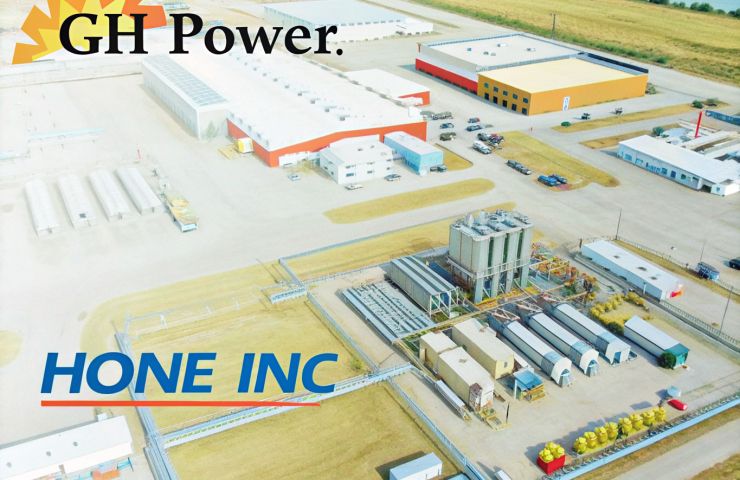
W.L. Gore has spent decades mastering the structure of expanded polytetrafluoroethylene (ePTFE), the same material behind Gore-Tex, and applying that expertise to the very different demands of electrochemical systems. Their GORE-SELECT® reinforced membranes are used in PEM fuel cells across heavy-duty vehicle applications, where the demands for power density and durability are unforgiving. By 2030, Gore’s Proton Exchange Membrane technology will reduce CO2 emissions by 600,000 metric tons, equivalent to removing emissions from 130,000 cars off the road for a year. For the production side of the equation, Gore’s GORE® PEM M275.80 membrane for water electrolysis is engineered to minimize LCOH and support deployment at multi-GW scale. The company’s approach, tailoring the nanoscale structure of ePTFE to meet the specific requirements of different electrochemical environments, gives it a materials platform that is difficult to replicate. Whether supporting fuel cell vehicles or water electrolysis Gore is deeply committed to ensuring fitness for use. We prioritize product testing, customer support, quality assurance, and R&D. Our customers count on Gore to deliver innovative, high-impact technologies that do what we say they will do, every time. For 30 years Gore has been producing high-performance components for energy systems and supporting infrastructure. Gore’s products and emerging capabilities help customers develop and implement cleaner, more reliable, and more efficient energy technologies with a lower total cost of ownership.
AGC Chemicals brings a different but equally deep chemical heritage to the hydrogen economy: fifty years of expertise in fluoropolymer science, originally developed for the chlor-alkali industry. That foundation underpins the entire FORBLUE™ product family, which now addresses multiple electrolysis chemistries. The FORBLUE™ S-Series fluorinated cation exchange membranes is used for PEM water electrolysis. The FORBLUE™ Selemion hydrocarbon membranes support anion exchange membrane (AEM) electrolysis, while FORBLUE™ i-Series ionomer dispersions are used in fuel cell electrodes and PEM electrolyzer electrodes alike. AGC’s AFLAS® Fluoroelastomers provide sealing solutions for hydrogen transport components. Guided by the vision of “Chemistry for a Blue Planet”, AGC Chemicals is dedicated to pursuing clean energy technologies to meet future demand while protecting our planet.
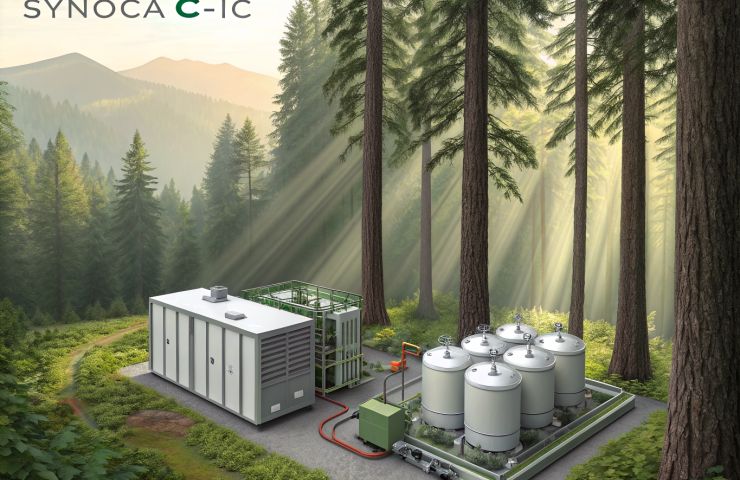
H2MOF is approaching the hydrogen storage challenge from first principles, literally. The company was founded by Nobel laureates Professor Omar Yaghi, the founder of reticular chemistry, and Professor Sir Fraser Stoddart, the founder of artificial molecular machinery. Prof. Omar Yaghi received the Chemistry Nobel Prize in 2025 for the development of Metal-Organic Frameworks (MOFs). MOFs are crystalline materials with extraordinarily high internal surface areas, some of the highest of any known substance, created by linking metal nodes with organic ligands in precise geometric arrangements. H2MOF is nano-engineering structures specifically to store and transport hydrogen molecules at low pressures and near-ambient temperatures. Their solid-state technology operates at pressures as low as 20-bar, less than 3% of a conventional 700-bar compressed hydrogen tank, eliminating the multi-stage compression equipment, energy costs, and safety concerns associated with high-pressure storage. In addition, it works at near-ambient temperatures without the need for cryogenic cooling, thus mitigating safety concerns associated with handling liquid hydrogen, but also virtually eliminating boil-off losses and reducing the high energy consumption and cost penalties associated with liquefaction, storage and transportation of hydrogen with expensive cryogenic equipment.
For a hydrogen economy that has long treated storage as one of its hardest unsolved problems, the molecular precision of MOF chemistry represents a genuinely new direction.
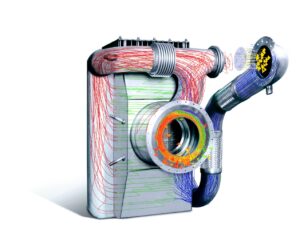
BOSAL Energy occupies a critical yet often underappreciated part of the hydrogen value chain: thermal management. Solid oxide fuel cells (SOFC) and solid oxide electrolyzers (SOEC) operate at temperatures between 600°C and 1,000°C. At these conditions, how heat is transferred, recovered, and distributed—and how little pressure is lost in doing so—ultimately determines system efficiency and economic viability. Against the backdrop of increasing global momentum behind SOEC technology, BOSAL plays a key role as a supplier of hot Balance of Plant (BoP) components that are essential to performance and scalability. The company’s proprietary compact, fully welded ultra-thin foil heat exchangers deliver up to 95% heat transfer effectiveness with exceptionally low back pressure, in a modular architecture that can be scaled from small to very large system configurations.
What differentiates BOSAL is not only performance, but a clear pathway toward industrialization. Its heat exchanger designs enable significant reductions in size and mass compared to conventional brazed plate or tubular solutions, while allowing optimized flow paths. This translates into superior thermal efficiency per unit volume—critical for next-generation hydrogen systems. Equally important is BOSAL’s focus on manufacturability from the outset. The company has validated a semi-automated pilot line in a relevant environment and is advancing toward fully automated, high-volume production. This positions BOSAL to deliver both performance and cost competitiveness at scale, supporting broader industry efforts to industrialize hydrogen technologies. With more than 20 years of experience in fuel cell and electrolyzer applications, BOSAL also supplies heat exchangers for reformers that convert hydrocarbons into hydrogen and for recuperators in fuel-flexible gas turbines. Ultimately, every electrochemical advance must operate within a thermal system—and BOSAL ensures that system enables, rather than limits, performance.
The Road Ahead
The hydrogen economy will be built on chemistry. Not just the chemistry of hydrogen itself, its combustion, its electrochemistry, its bonding behavior, but the chemistry of everything around it. The membranes that produce it, the polymers that seal it, the frameworks that store it, and the thermal systems that keep the whole process running. FCHEA members are advancing each of these fronts simultaneously, bringing decades of materials expertise to bear on one of the most consequential industrial challenges of our time. The molecules are being engineered, the factories are being built, the transition is underway.
The post The Molecules Behind the Movement: How Chemistry is Powering the Hydrogen Economy appeared first on FCHEA.
What's Your Reaction?
 Like
0
Like
0
 Dislike
0
Dislike
0
 Love
0
Love
0
 Funny
0
Funny
0
 Wow
0
Wow
0
 Sad
0
Sad
0
 Angry
0
Angry
0










Comments (0)