


Coumarin-Linked COF Boosts Hydrogen Production in Photocatalytic Water Splitting
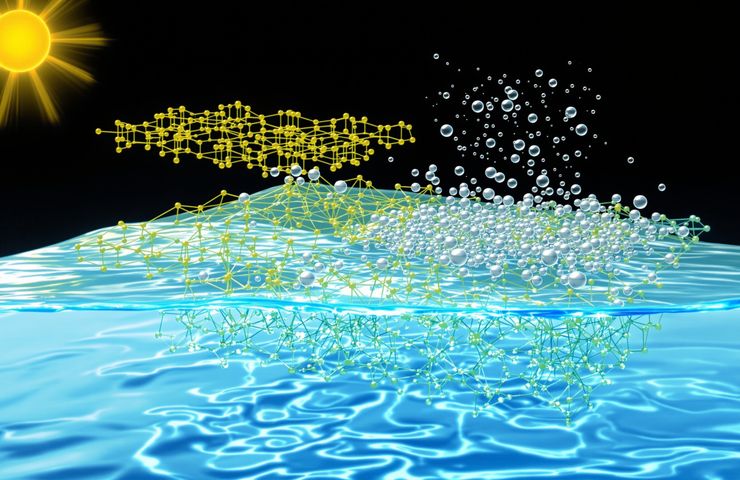
Researchers at the Chinese Academy of Sciences in both Zhejiang and Beijing have made an exciting breakthrough with a new coumarin-linked covalent organic framework. This innovation promises to significantly extend the lifespan of photo-generated charges, boosting hydrogen production rates well beyond what's possible with traditional imine-linked models in photocatalytic water splitting. Their findings, published in Nature Synthesis, showcase a smart materials-design strategy that could propel clean hydrogen production through solar photocatalysis to new heights.
Covalent organic frameworks (COFs) have recently emerged as some pretty promising contenders for solar hydrogen production. They’re metal-free, have tunable porosity, and allow for modular synthesis, all while boasting adjustable electronic properties. One major hurdle, though, has been the rapid electron-hole recombination that holds back their efficiency under visible light. But instead of just tweaking post-synthetic modifications or relying heavily on metal cocatalysts, this team took a deep dive into linkage chemistry to tackle the problem right at the molecular level.
Start a free 7-day trial for unlimited articles plus hydrogen company, project & technology intelligence. Cancel anytime.
Continue reading on Hydrogen Fuel News → · Subscribe
What's Your Reaction?
 Like
0
Like
0
 Dislike
0
Dislike
0
 Love
0
Love
0
 Funny
0
Funny
0
 Wow
0
Wow
0
 Sad
0
Sad
0
 Angry
0
Angry
0









Comments (0)