


Fuel Cell Catalyst Durability Enhanced by Nitrogen-Doped Graphene Shells on Pt@N-FLG/SWCNT
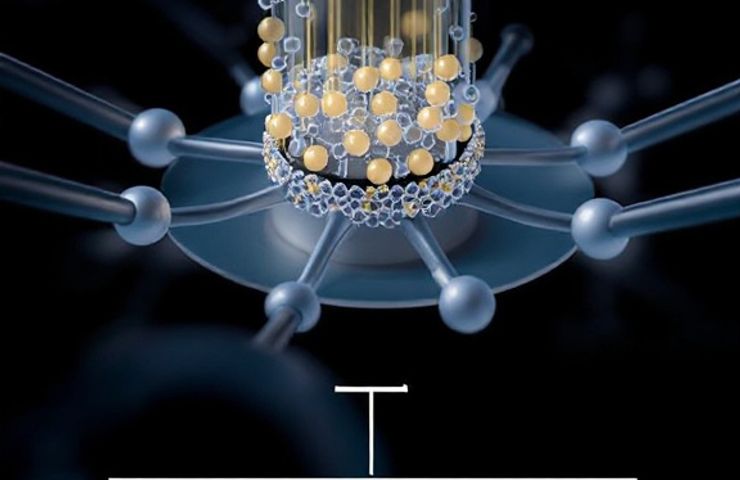
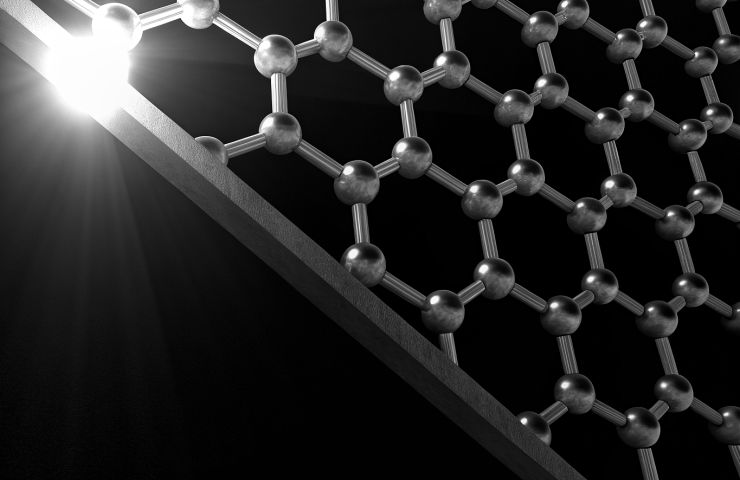
Researchers at Nagoya University report a new cathode catalyst architecture for polymer-electrolyte fuel cells. Their approach encapsulates platinum nanoparticles in layered nitrogen-doped graphene and bonds those particles to single-walled carbon nanotubes, Nagoya University says.
The composite material, named Pt@N-FLG/SWCNT, produced an electrochemical surface area of 96.3 m² per gram of platinum and a mass activity of 369 mA mg⁻¹ at 0.9 V versus the reversible hydrogen electrode in laboratory tests, according to a peer-reviewed paper in ACS Catalysis. Those metrics exceeded the performance of a commercial Pt/C reference used in the same experiments, the paper shows.
Membrane-electrode assembly testing under accelerated durability cycles — designed to mimic repeated start–stop events and periods of high-power operation — found that the catalyst retained 96.9 percent of its electrochemical surface area after 30,000 cycles between 0.6 and 0.95 V, Nagoya University reports. Over that run the material experienced a voltage loss of 22.8 mV at a current density of 0.8 A cm⁻². In a separate high-voltage protocol between 1.0 and 1.5 V, intended to stress carbon supports, the material lost 27.2 percent of its active surface after 5,000 cycles and showed no observed voltage drop at 1.5 A cm⁻², according to Nagoya University. The university notes these figures are superior to those measured for the commercial Pt/C reference under the same conditions.
Start a free 7-day trial for unlimited articles plus hydrogen company, project & technology intelligence. Cancel anytime.
Continue reading on Hydrogen Fuel News → · Subscribe
What's Your Reaction?
 Like
0
Like
0
 Dislike
0
Dislike
0
 Love
0
Love
0
 Funny
0
Funny
0
 Wow
0
Wow
0
 Sad
0
Sad
0
 Angry
0
Angry
0





Comments (0)