

Solar Module Reliability under Extreme Indian Conditions: Why IEC Certification Is Only the Starting Point
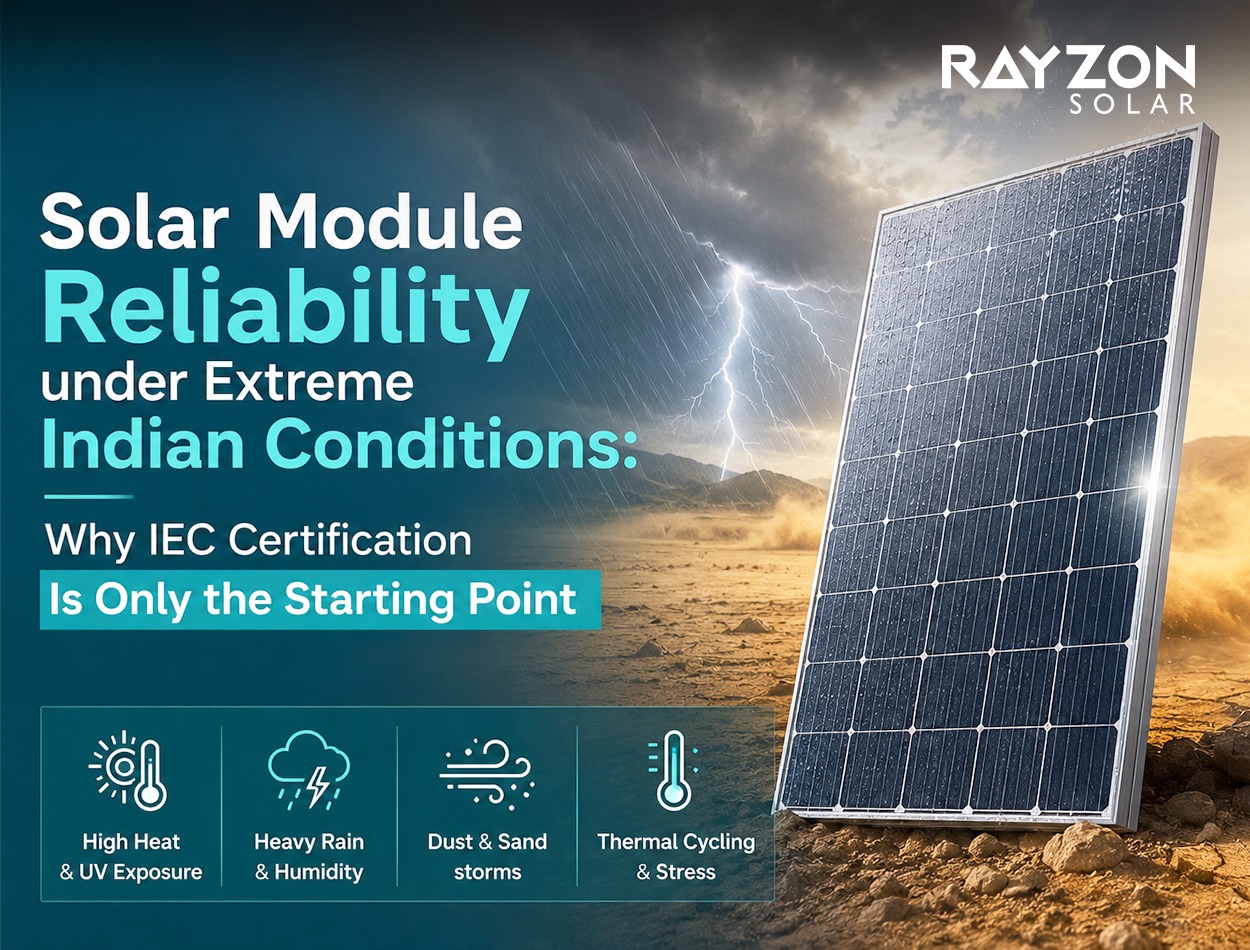
India offers one of the world's strongest solar resources. However, it also presents one of the harshest operating environments for photovoltaic (PV) modules. High temperatures, coastal humidity, desert dust, intense UV radiation, dust combined with fuel emissions and agricultural emissions continuously challenge module performance. Choosing a module based only on IEC certification may not ensure long-term reliability.
Thermal cycling remains a major concern across India. Modules expand during hot afternoons and contract at night. These repeated temperature changes stress solder joints, interconnections, and cells. Over time, microcracks can reduce power output and increase electrical losses. While IEC 61215 requires 200 thermal cycles, extended testing has shown that some modules experience significant degradation only after higher stress levels, which is a reality in Indian conditions.
Humidity creates another challenge, especially in coastal regions and during the monsoon . Moisture can penetrate through edge seals and back sheets, causing corrosion, delamination, and insulation failures. Standard damp heat testing simulates these conditions, but long-term field exposure often exceeds laboratory requirements as humidity in conjunction with higher temperatures is a deadly combination.
What's Your Reaction?
 Like
0
Like
0
 Dislike
0
Dislike
0
 Love
0
Love
0
 Funny
0
Funny
0
 Wow
0
Wow
0
 Sad
0
Sad
0
 Angry
0
Angry
0







Comments (0)