


Solar’s infrastructure obstacle

For years, the solar industry focused on lowering module costs, improving tracker technology, increasing inverter efficiency, and optimizing project financing. Those efforts transformed solar from a niche technology into one of the most competitive forms of new electricity generation in the world.
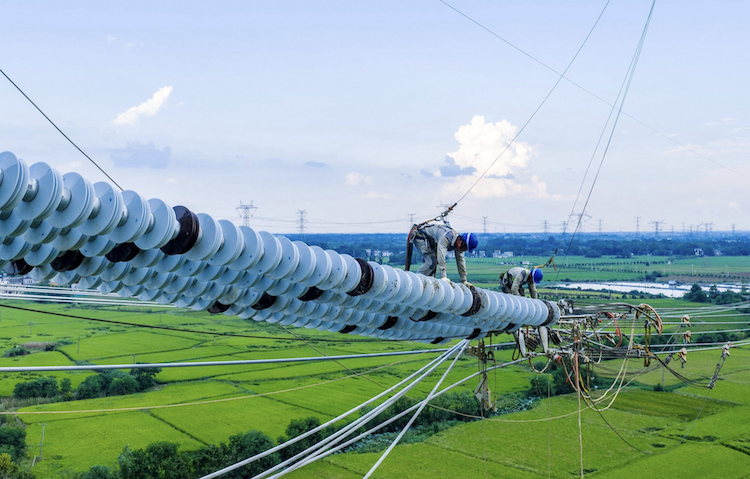
Today, however, some of the most important variables affecting project schedules and economics have little to do with solar equipment itself. Transmission infrastructure, utility interconnection requirements, substation design, right-of-way complexity, and the availability of critical high-voltage equipment are becoming central to the future of energy development.
Texas provides one of the clearest examples of this challenge. Driven by data centers, artificial intelligence, advanced manufacturing, semiconductor production, and electrification, the state is experiencing unprecedented interest from both energy developers and large-load customers. What was once primarily a discussion about generation has increasingly become a discussion about infrastructure.
The Electric Reliability Council of Texas (ERCOT) has received requests representing hundreds of gigawatts of prospective new load, much of it associated with data centers and large industrial customers. While not all these projects will materialize, the scale of the demand illustrates how rapidly the market is changing. Historically, developers often selected land first and addressed interconnection later. Today, that sequence is frequently reversed.
Developers increasingly evaluate transmission availability, substation proximity, interconnection feasibility, voltage levels, and expansion potential before making final site selection decisions.
Interconnection management
Interconnection has become a strategic development discipline involving transmission planning, utility coordination, equipment procurement, permitting, land strategy, capital allocation, and long-term project scalability.
Financial security requirements associated with interconnection can hit several million dollars before a project reaches financial close. Utility reviews may influence project schedules years before a facility begins generating electricity. Transmission upgrades can significantly impact both economics and timelines.
These realities are reshaping the way projects are developed. Increasingly, successful developers must think like transmission planners.
Site configuration, voltage selection, collector system design, future expansion capability, and right-of-way strategy are becoming critical decisions from the earliest stages of development.
At the same time, an often-overlooked challenge is emerging within utility supply chains. Much of the industry’s supply-chain discussion over the past several years has focused on modules, batteries, and inverters. While these components remain important, a growing portion of schedule risk now resides within utility-controlled infrastructure.
Transformers, breakers, switchgear, protection systems, relay packages, communication equipment, and substation components are increasingly determining project schedules.
In one recent interconnection process, a utility-approved 345 kV breaker became one of the critical items for energization. While discussions often focus on modules, batteries, financing, and power prices, the availability of a single transmission component had a direct impact on project schedule and execution planning.
From an investor perspective, this may sound surprising because it is usually the case that discussions around energy projects will focus on generation technology, financing structures, tax credits, and power prices. Yet the availability of a single high-voltage component can influence the timing of an entire project.
Utilities understandably maintain strict qualification standards for critical infrastructure. However, problems inevitably arise if approved supplier pools become limited, causing decreasing procurement flexibility and increasing schedule risk.
These are the types of challenges that rarely make headlines but increasingly shape project outcomes. This shift is particularly important because utility-scale solar and battery storage remain among the fastest generation technologies available.
A utility-scale solar project can often be designed, financed, and constructed in less than two years, but the infrastructure required to connect that project to the grid may require significantly longer planning time frames.
Electrification competition
The energy industry often discusses artificial intelligence, data-center expansion, energy transition, and economic development as separate topics. In reality, these are converging to become parts of the same conversation. Every new data center ultimately becomes a generation, transmission, interconnection, and infrastructure challenge.
Communities seeking to attract advanced manufacturing and large-load investments require confidence that sufficient power can be delivered when needed. Developers compete for access to transmission capacity. Utilities face growing pressure to expand infrastructure while maintaining reliability and affordability.
The challenge extends far beyond renewable energy. This is a fundamental infrastructure challenge. The United States is entering what will likely become the largest electricity expansion cycle in generations.
The industry’s ability to meet this future electricity demand will depend on much more than adding megawatts. It will depend on how effectively developers, utilities, regulators, equipment manufacturers, and investors work together to expand the infrastructure that supports those megawatts.
The United States possesses the technology, capital, engineering expertise, and entrepreneurial ecosystem necessary to meet the challenge. The greater question is whether transmission systems, interconnection processes, and critical infrastructure supply chains can evolve quickly enough to support the unprecedented growth now being contemplated across the country.
Over the past decade, the solar industry has demonstrated its ability to scale generation. The next decade will test its ability to scale the infrastructure required to deliver that generation where it is needed most.
About the author
Fernando Queiroz is CEO and executive director of engineering at Levona Renewables and founder of Infinite Photon. He has more than 18 years of experience in renewable energy, power infrastructure, and utility-scale project development across the Americas. His work spans engineering, EPC, interconnection strategy, transmission infrastructure, and project development, with a particular focus on large-scale energy infrastructure projects in ERCOT.
The post Solar’s infrastructure obstacle appeared first on pv magazine Global.
What's Your Reaction?
 Like
0
Like
0
 Dislike
0
Dislike
0
 Love
0
Love
0
 Funny
0
Funny
0
 Wow
0
Wow
0
 Sad
0
Sad
0
 Angry
0
Angry
0










Comments (0)